
Weaving the Future in the Amazon: SERES at COP30 and the Power of Central American Youth
In November 2025, SERES took a significant step by actively participating in COP30 in Belém, Brazil. This was not just another trip—it was an invitation to bring the voice of Central American youth—an Indigenous, community-rooted and resilient voice—to the heart of the global climate conversation. It was a powerful reminder that the territories most affected by the climate crisis are also generating some of the wisest and most transformative responses.
At a time when Central America faces historic cuts in international cooperation, increasingly restrictive migration policies, and highly vulnerable territories, being present at COP30 meant much more than attending. It meant representing, influencing, and sustaining a voice that rarely has space at these tables.
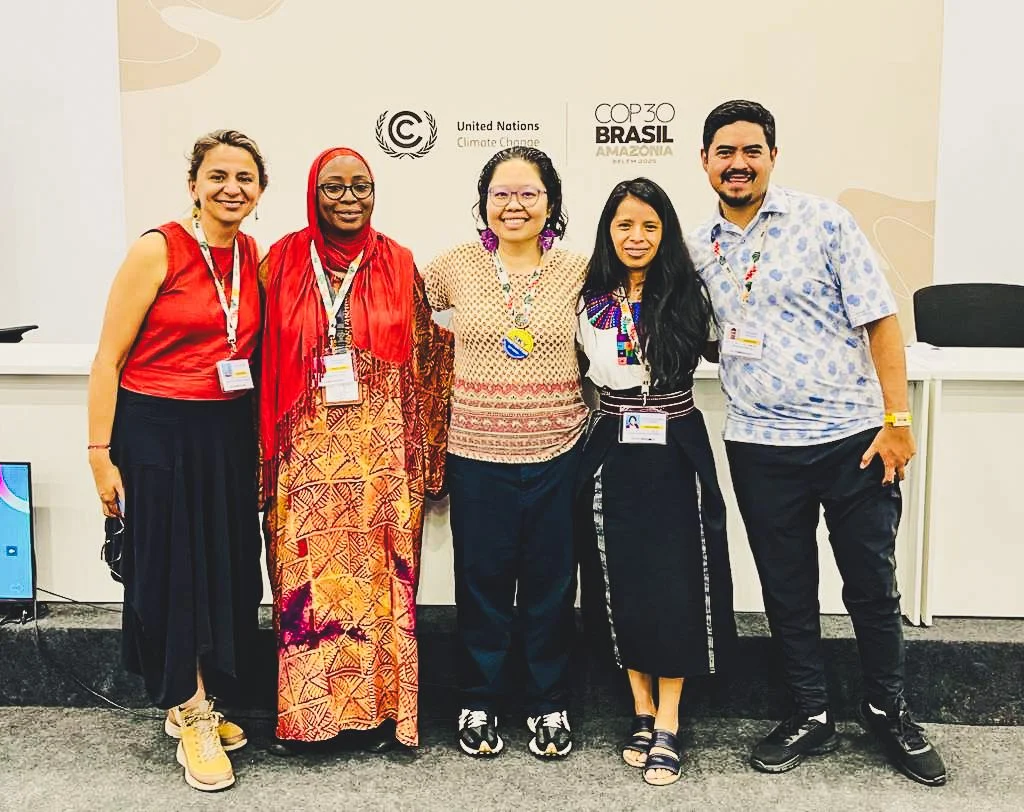
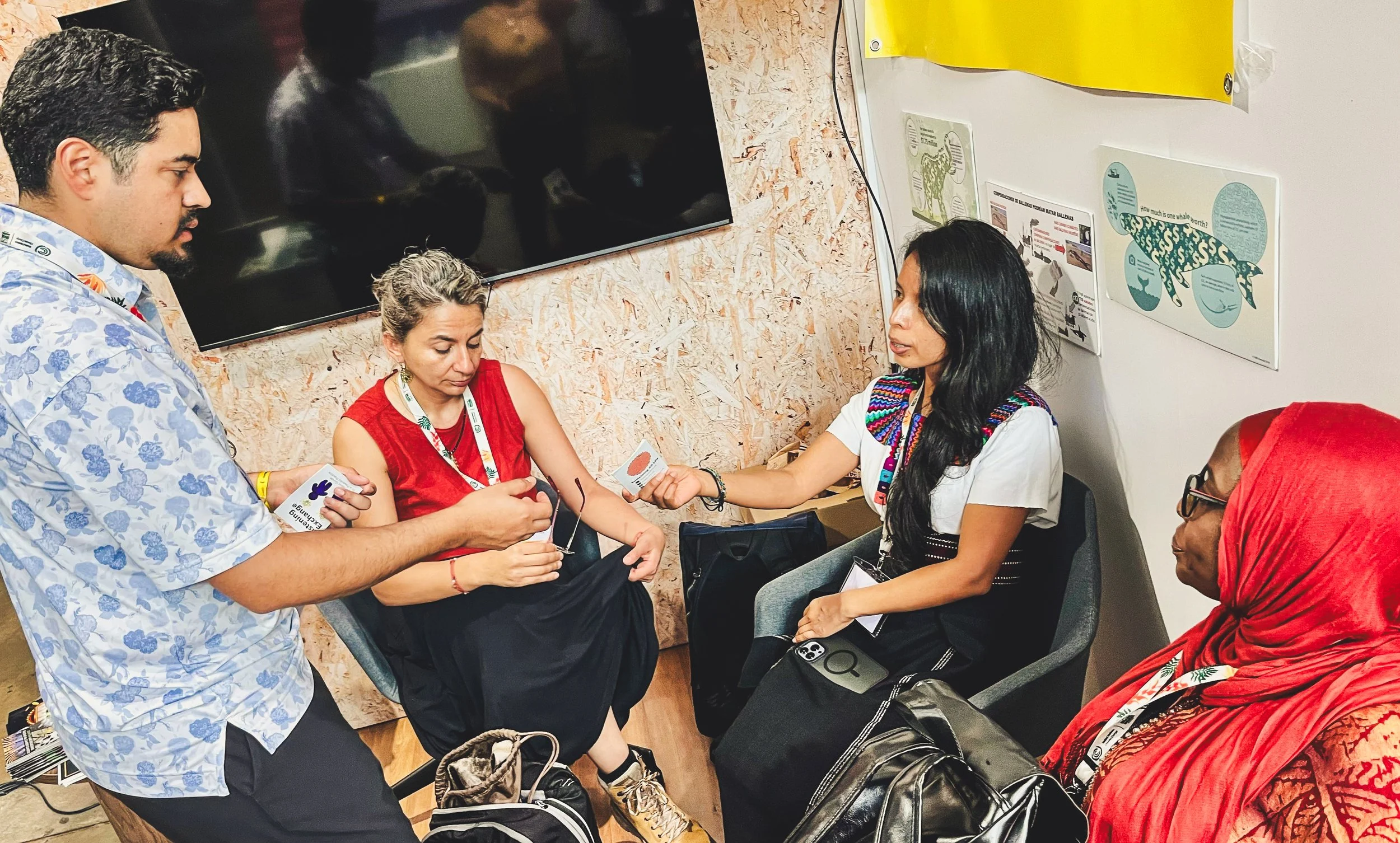
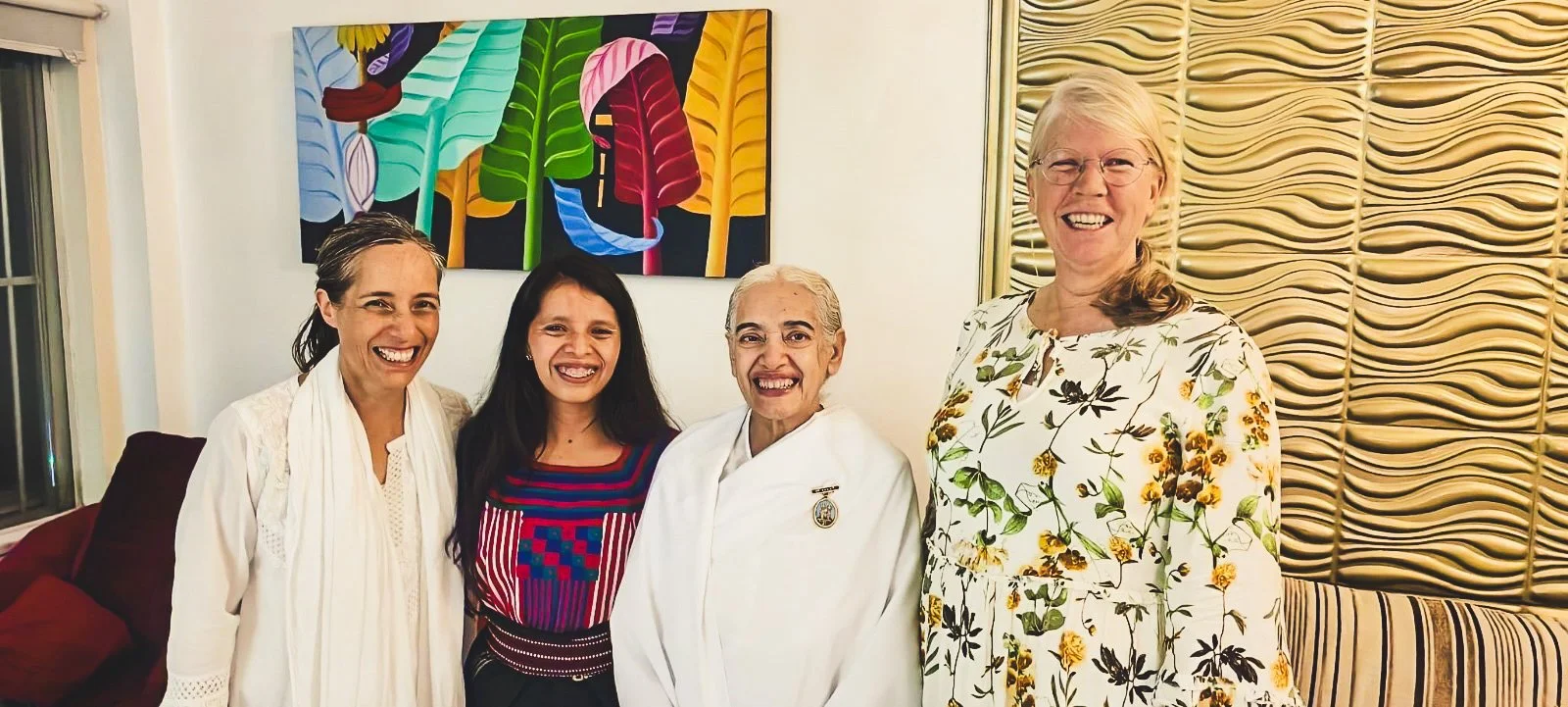
Leaders from Colombia, Nigeria, United States, Guatemala and México/Canadá
Panelists at COP30: Tools for a Regenerative Climate Movement
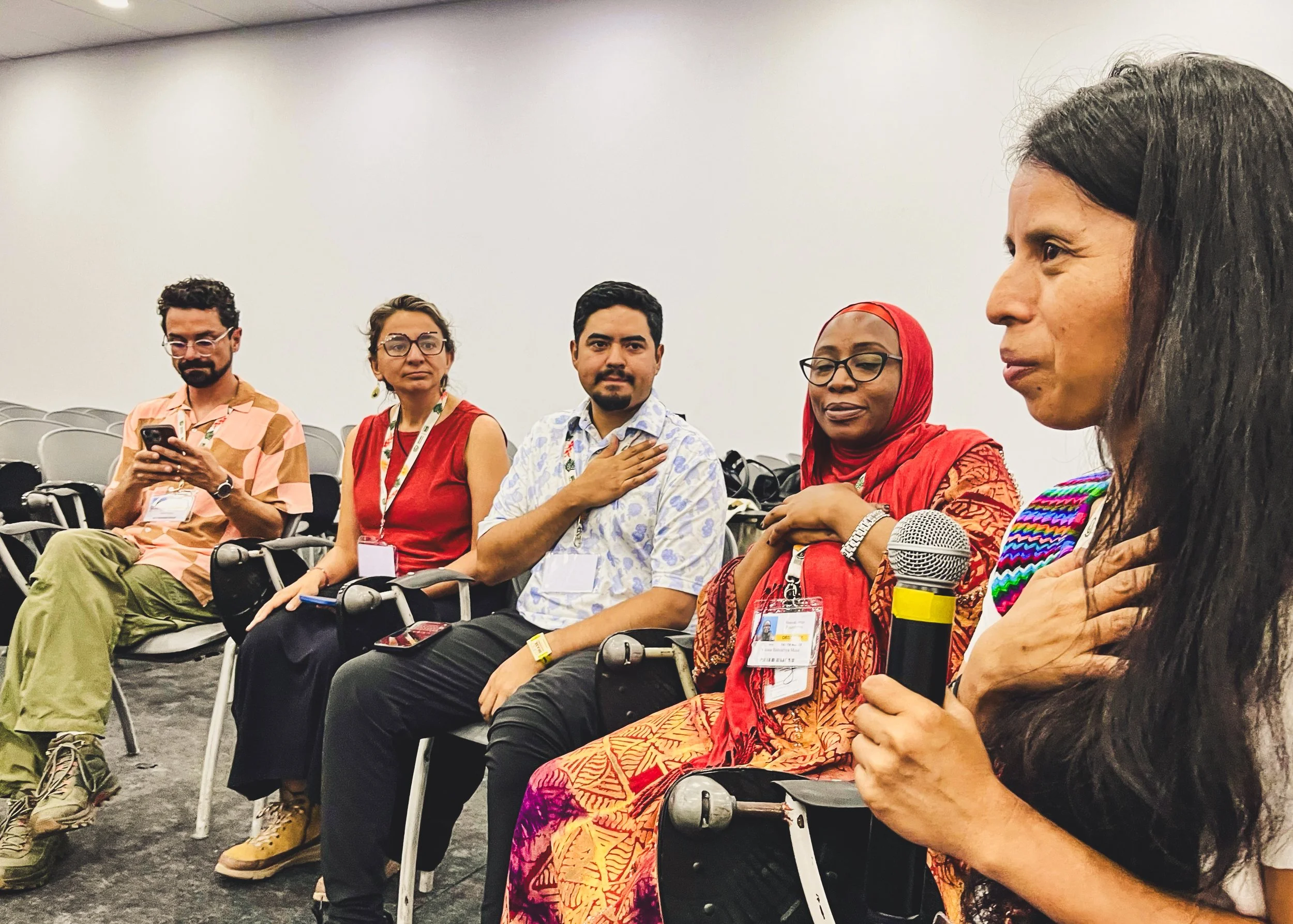
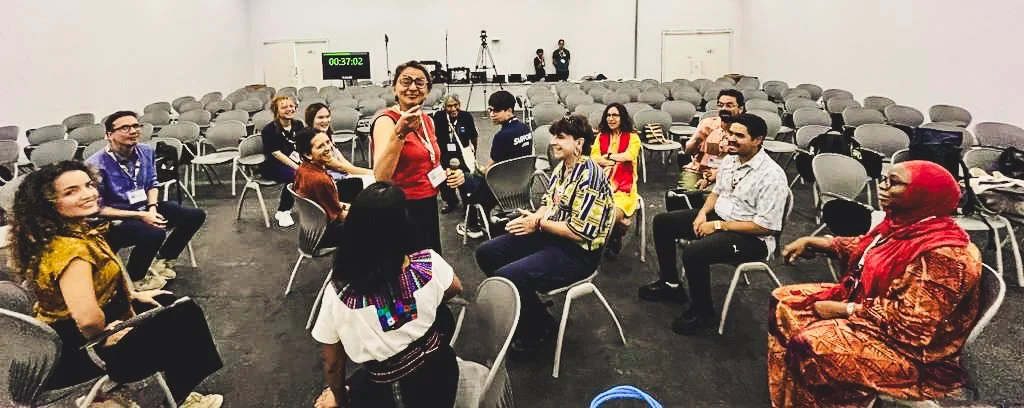
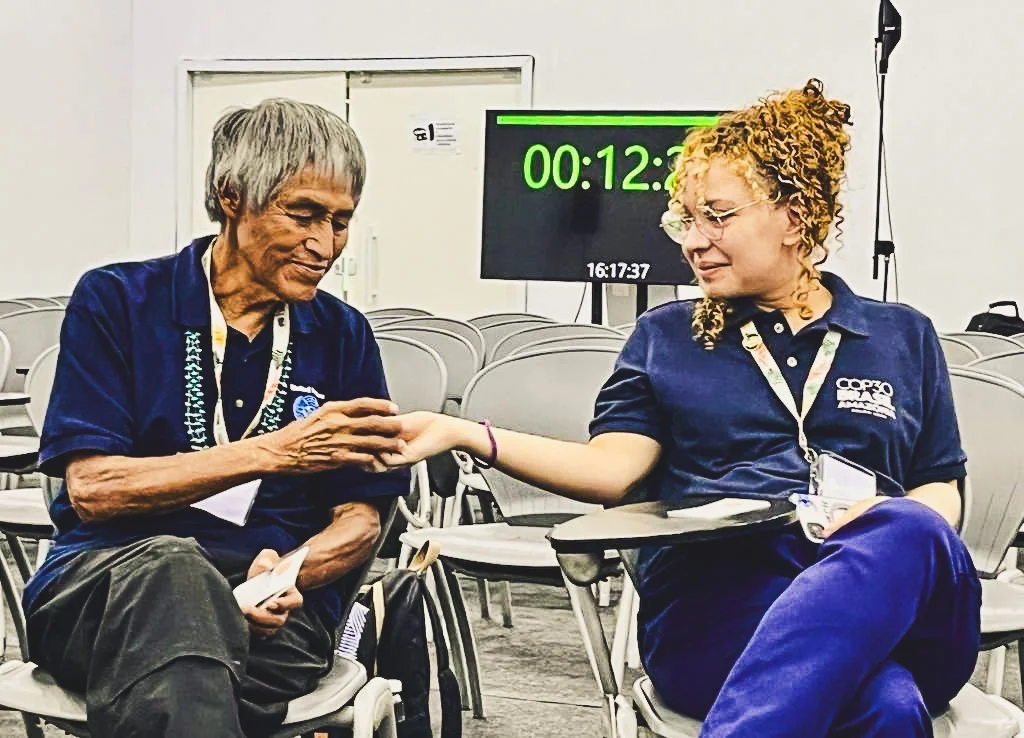
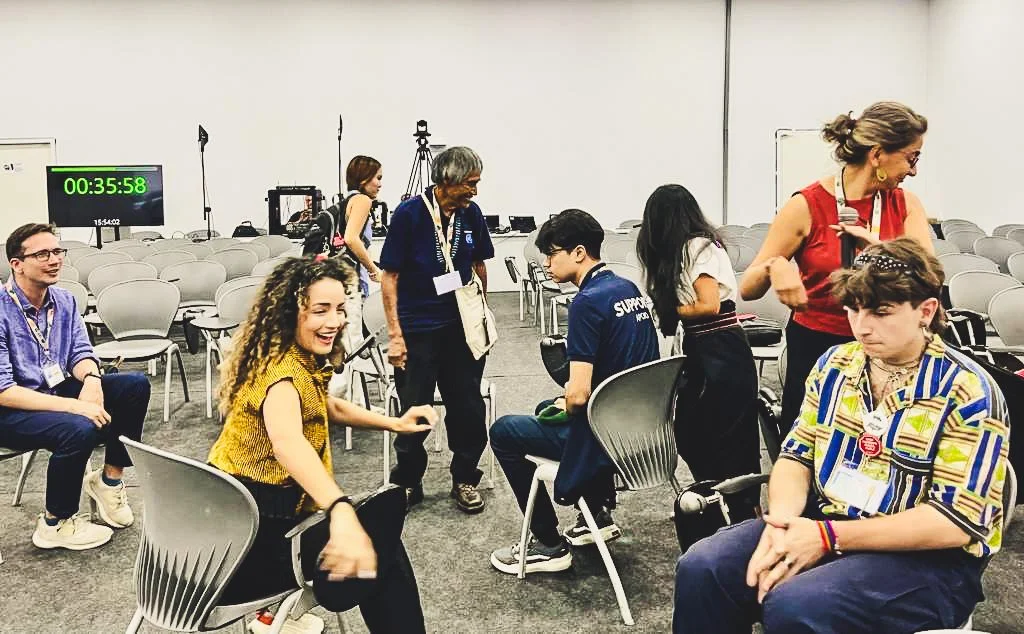
SERES was invited as a panelist in the official event “Tools for Climate Organizing,” organized by Reevaluation Foundation/Sustaining All Life, Dharma Drum Mountain Buddhist Association (DDMBA), and the Global Peace Initiative of Women (GPIW). Alongside leaders from Nigeria, Taiwan, and the United States, our representatives —Abigail Quic (SERES/GPIW) and Liliana Barrera— shared knowledge, tools, and practices to sustain strong, collaborative, and emotionally healthy climate movements.
In her intervention, Abigail presented a vision rooted in the Maya Tz’utujil worldview, where body, community, and territory are a single weaving. She explained that the climate crisis not only transforms the outer climate—droughts, irregular rains, loss of fertile soils—but also the inner climate of people: their mental health, purpose, identity, and ability to imagine a future.
“When a young woman sees her family’s cornfield fail, it is not only the food that disappears.
Hope disappears. Identity disappears. Safety disappears.”
—Abigail Quic, COP30
She also presented the approach SERES has built over 15 years: a leadership model that integrates two inseparable dimensions of climate action:
The inner climate: emotional well-being, resilience, purpose, healthy relationships.
The outer climate: regenerative practices, community action, territorial networks, public policies, and eco-social economic models.
When these two levels work together —she emphasized— movements do not simply react to problems. They become more coherent, creative, and sustainable.
Ulew Fuego: Where the Land is the Teacher
During the panel, SERES highlighted the land-based learning model implemented at Ulew Fuego, our eco-social learning center. This space has become a living laboratory where young people from Guatemala and El Salvador:
practice agroecology,
care for water and soil,
develop community prototypes,
and engage in experiences that awaken memory, identity, and a sense of responsibility.
“In Ulew Fuego, the land itself is the teacher,” Abigail shared.
There, young people facing climate anxiety find grounding, tools, and a community that supports them in turning their concern into collective action.
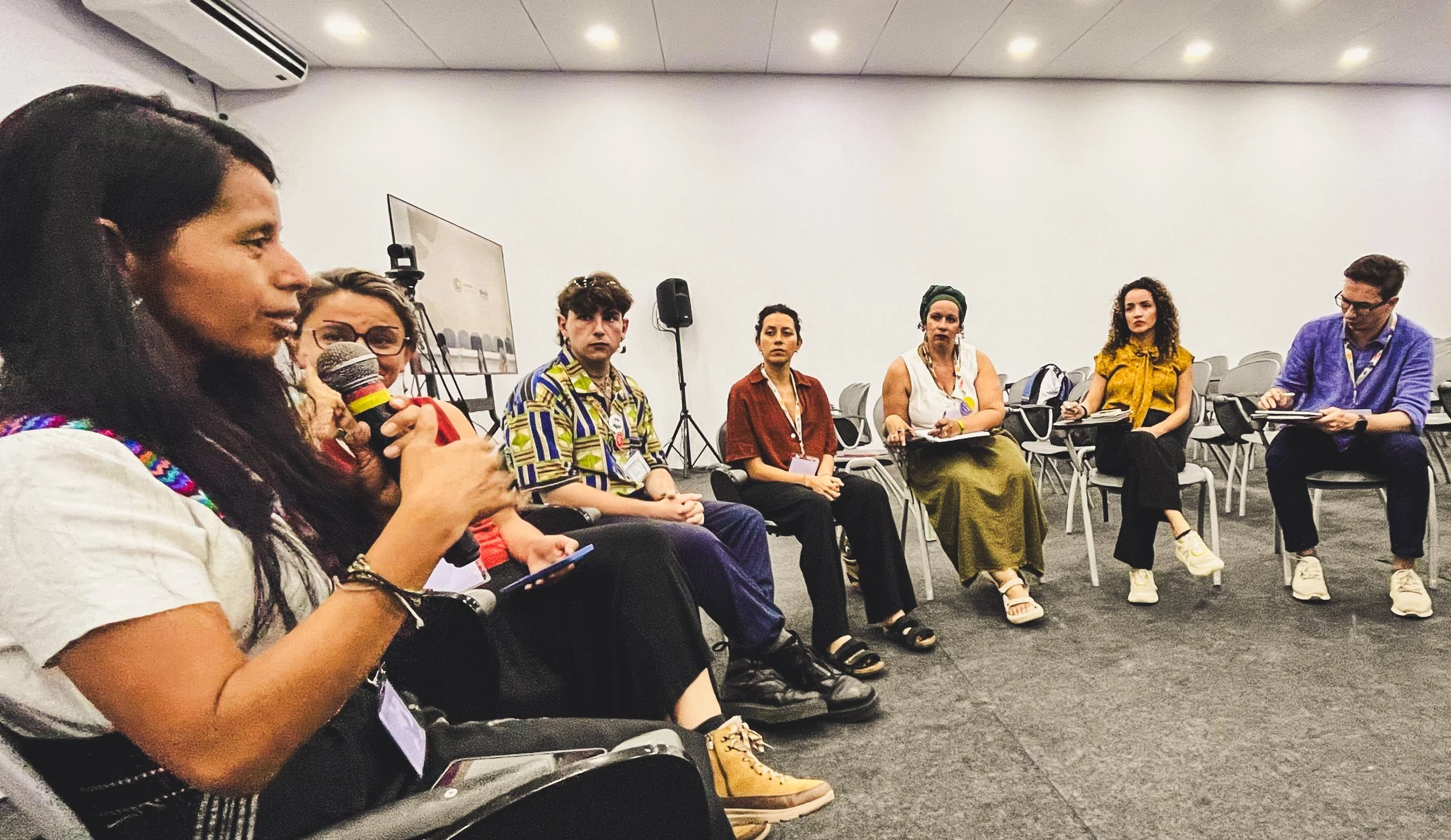
In the Climate Wisdom Studio: Spirituality, Identity, and the Future
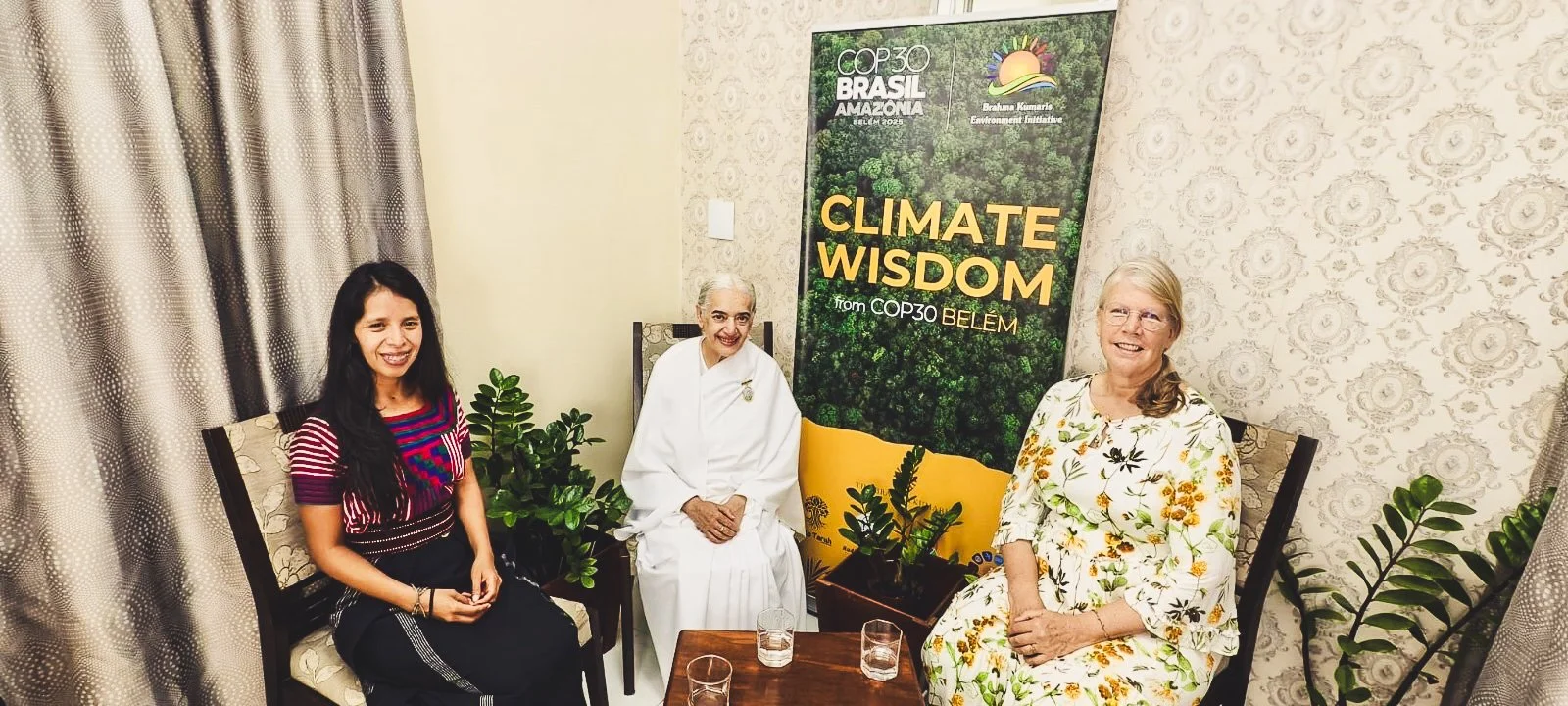
Beyond the official panel, SERES was invited to the Climate Wisdom Studio hosted by Brahma Kumaris, a space designed to amplify spiritual and Indigenous voices in the climate conversation. Here, Abigail shared her story as a Maya Tz’utujil woman from San Juan La Laguna: a childhood shaped by the lake, the mountains, community learning, and the coexistence of ancestral spirituality and Christianity.
She spoke about the principles that guide her community:
the interconnection with nature,
the value of service,
the nawal (life purpose),
the strength of women as knowledge-keepers,
and reciprocity as a way of walking through the world.
“My biggest concern today,” she said, “is seeing how many Indigenous and rural youth are losing their connection to their land, their identity, and their story.”
“That is exactly where SERES works: rebuilding roots so youth can face the climate crisis with purpose and strength.”
The session closed with an invocation in K’iche’, a poem by Humberto Ak’abal honoring the earth as origin, home, and destiny. It was an intimate and historic moment: a young Indigenous Central American woman closing an international session with ancestral memory, spirituality, and land-centered wisdom.
SERES at COP30: More Than Participation, A Responsibility
Being at COP30 was not a symbolic act. It was a real engagement. It was carrying a voice that has long been marginalized. It was representing thousands of young people with whom we work—youth who experience the climate crisis through their bodies, their territories, and their life choices.
SERES’ participation sent a clear message:
Indigenous and rural youth from Central America have deep, integral, and urgent solutions to offer the world.
And at the same time, it reaffirmed that our mission is more necessary than ever.
In a context where:
U.S. government aid is shrinking,
migration policies are tightening,
and territories are becoming more vulnerable,
It is crucial to continue forming leaders who can unite emotional well-being, collective action, cultural memory, and regeneration.
We Continue Weaving the Future
What SERES brought to COP30 was not just a report or a speech.
We brought relationships, community wisdom, hope, and concrete actions already growing in our territories.
And we did it because we do not walk alone.
Thank you to all who believe in this mission, who sustain SERES with resources, trust, and solidarity. Thank you because every young person who rises with more strength, clarity, and purpose is part of a collective movement that you help build.
We move forward -
With the land.
With the youth.
With the future.
