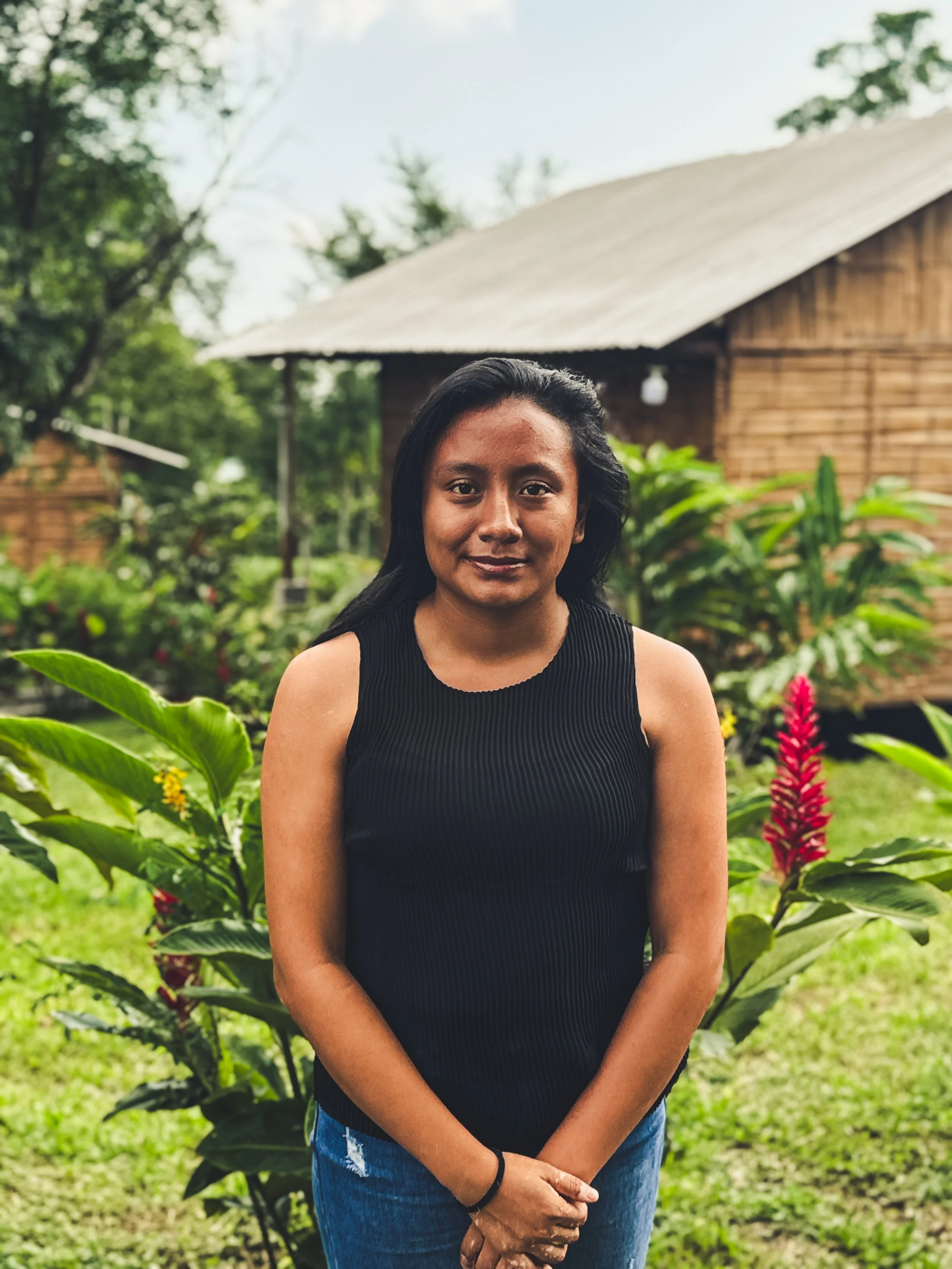
From green hands to community research: Helen’s leadership continues to evolve
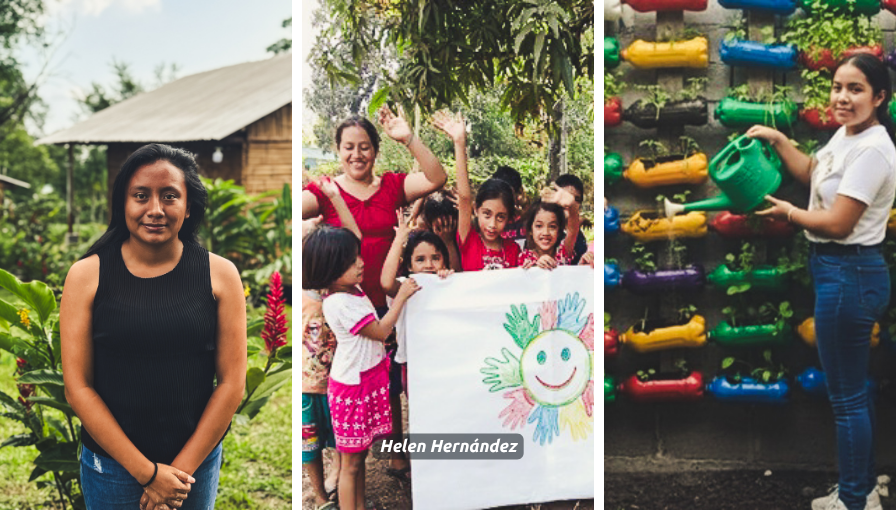
When Helen Hernández launched Green Hands in Prados del Carmen, Escuintla, her work began with a concrete question: How could she engage other young people in environmental stewardship through actions they could carry out in their own community?
In November 2025, Helen worked alongside young people through a series of activities focused on waste management, reusing materials, family gardens, and environmental education. Eleven young people participated in the first gathering. Their conversations led to ideas for creating useful objects from recyclable materials, organizing demonstrations, and sharing what they had learned with others in the community.
The ideas soon moved beyond conversation. The group designed and installed a collection bin for paper, cardboard, plastic, and cans. They then worked on family gardens using available spaces at home and culminated the process by collectively creating a mural with messages about water conservation, waste reduction, and protecting nature.
One participant, Hillary de Paz, captured one of the ideas that emerged from the group: “If we want a different future, we must begin educating in the present.”
For Helen, Green Hands was also an early opportunity to practice leadership. She had to convene people, facilitate events, organize resources, and support others in turning an environmental concern into visible action.
Months later, her next project presented a different challenge.
Growing Together in Community was created to connect schools in El Rodeo with Ulew Fuego and coordinate resources and educational opportunities for the community. This time, Helen’s work was no longer focused only on activities with a group of young people. It required building relationships with schools, families, community leaders, and other local actors.
And the process didn’t unfold exactly as planned.
One of the first activities was intended to be a science rally in local schools. Administrative changes within the education system delayed the necessary approvals. Rather than waiting, Helen and the team adapted the plan. They brought the process directly into the community and organized a gathering in El Rodeo with 26 women and 10 men.
The presence of children—who accompanied some of the women responsible for their care—also required the methodology to change. Activities were designed to include the children while adults identified their strengths, local resources, and opportunities for community organization.
The experience offered a concrete lesson: Working with communities also means being willing to adjust a methodology when local realities do not match what was written in the plan.
A few days later, Helen worked with young people in Santa Rosa, El Rodeo, around another question: What is happening to our community’s natural resources, and what can we do about it?
Their answers were specific. Young people identified plastic waste along community roads and declining water flow from local sources during the dry season. They also recognized practices already used by their families: reusing water, turning organic waste into fertilizer, reducing plastic burning, and saving energy.
They then developed proposals: community clean-up days, waste collection points, and a native plant nursery to support the restoration of local watersheds.
At this point, something important happened in Helen’s leadership journey: Young people’s ideas began to enter a community decision-making structure. A representative of the Community Development Council (COCODE) agreed to present their proposals at a general community meeting to explore organizational and financial support. The young people, meanwhile, agreed to organize an initial volunteer clean-up day.
Helen’s work also reached the public elementary school in Aldea El Rodeo. There, 27 students—12 boys and 15 girls—participated in environmental education activities and made everyday commitments related to waste, water use, and caring for plants at their school.
At the same time, Ulew Fuego became another space for learning. Together with participants of different ages, the group developed three soil profiles and established a syntropic agriculture plot with four planting beds. The forest was no longer simply the subject of an activity; it became a place to observe, compare, and experiment with different ways of growing food and caring for the land.
Taken together, Helen’s journey reveals something that a list of workshops cannot show.
She first learned to mobilize other young people around an environmental concern. She then had to adapt plans, work across generations, engage with community structures, and help turn observations from the territory into proposals that could reach decision-making spaces.
And her journey is still unfolding.
Her next stage will be community research. The goal is to engage key local actors in participatory processes where communities identify their challenges, prioritize possible responses, and develop community assessments that can connect with municipal planning.
Helen enters this next stage with new questions—and with experience built through action in her own territory.