New Circles, One Shared Purpose
In a time marked by climate urgency, social fragmentation, and growing disconnection between people and the Earth, new forms of learning are emerging—not as alternatives, but as necessary responses.
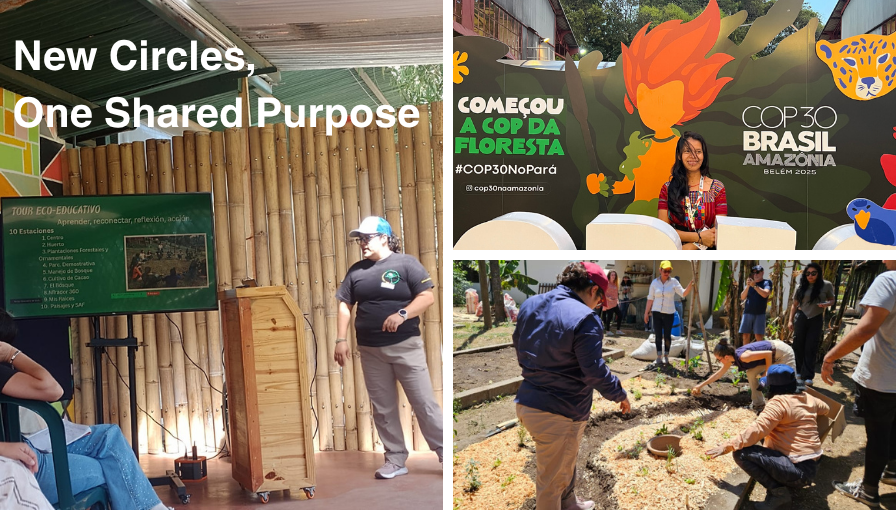
In March 2026, SERES participated in the III Eco-Education Congress in Antigua Guatemala, a regional gathering of organizations exploring how education can respond to the ecological and social realities of our time. Our participation was grounded in the experience of Ulew Fuego, represented by Alma Quilo, who shared how learning rooted in land, community, and lived experience can open pathways toward regeneration.
But beyond methodologies and presentations, what emerged was something deeper: a shared understanding that education must move beyond the transmission of knowledge. It must transform relationships—between people, communities, and the Earth.
Across Latin America, communities are navigating increasing climate vulnerability, economic pressure, and weakened social cohesion. In this context, eco-education becomes a critical space—not only to learn, but to reconnect, to question, and to rebuild from within territories.
This reflection resonates with a broader global conversation. Ahead of COP30, through the UNESCO Green Citizens network, we witnessed how this shift is taking shape across different contexts.
A mutirão—a Brazilian tradition of coming together to work for the common good—captures this spirit of collective action. It is not a concept imposed from outside, but a lived practice. During this exchange in Brazil, our colleague Caroline engaged with UNESCO Green Citizens, learning from initiatives that bring together community-led research, immersive education, and local leadership to protect the planet.
When asked how to make collective climate action part of everyday life, the answers pointed not to large-scale solutions, but to shifts in how we live, relate, and understand our place in the world:
“It’s about changing our mindset, reconnecting with local wisdom, listening to our elders, and learning from how they live—to build a better future.”
— Abigail Quic, Co-Executive Director, SERES
“We should remember that we are part of nature. When you’re part of something, you take care of it. It becomes natural.”
— Gabriela Soares, Research Coordinator, Iracambi
“We should try to regain control of our time… realizing we don’t need to produce or consume as much to feel fulfilled.”
— Tamara Klink, Writer, Navigator, and Lecturer
These reflections remind us that collective action is not only a global call—it is a daily practice. From restoring ecosystems to learning with children, from honoring ancestral knowledge to rethinking our relationship with time and consumption, we see how change is already being built in small, consistent, and deeply human ways.
At SERES, this is not new—but it is increasingly urgent.
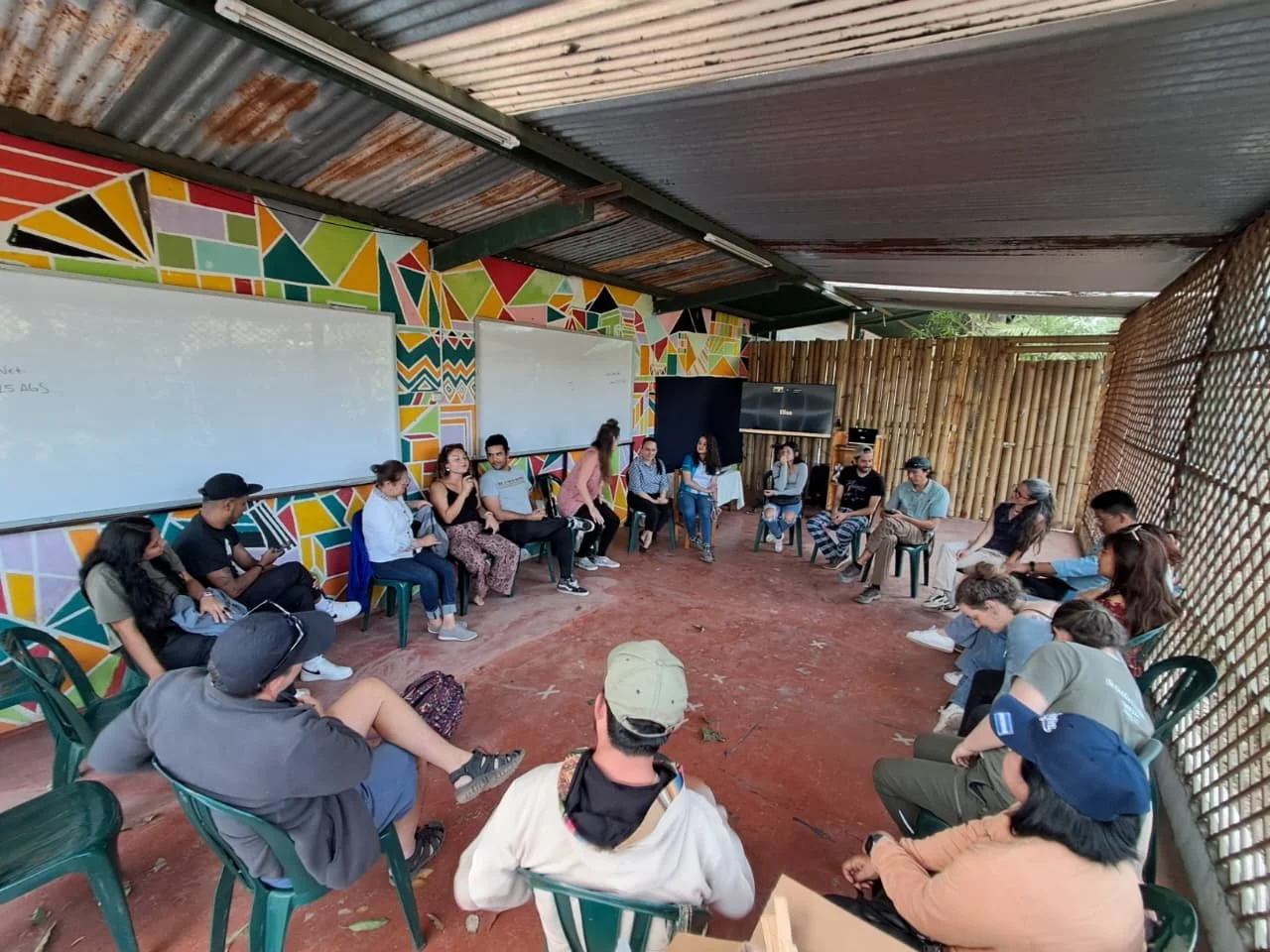
Spaces like Ulew Fuego embody this approach as a living classroom, where young people reconnect with land, reflect on their role in their communities, and develop the skills to lead regenerative futures. Through experiential learning, youth are not only gaining knowledge—they are building relationships, responsibility, and a sense of belonging.
This is the kind of leadership the present moment calls for: grounded in territory, shaped by experience, and sustained through community.
Because the future will not be built through information alone.
It will be built through connection.
Through collective action.
And through the courage to imagine—and live—differently.
We are not alone
